Russia used ChatGPT to run a covert influence campaign pushing pro-Kremlin narratives across the West
OpenAI has exposed a covert Russian influence campaign that used ChatGPT to generate social media posts and disrupted it by banning a cluster of ChatGPT accounts. The operators accessed the platform from Russia through VPNs and instructed ChatGPT to hide any linguistic clues pointing to their Ru...
OpenAI has exposed a covert Russian influence campaign that used ChatGPT to generate social media posts and disrupted it by banning a cluster of ChatGPT accounts.
The operators accessed the platform from Russia through VPNs and instructed ChatGPT to hide any linguistic clues pointing to their Russian origin. The campaign's goal was to promote the "International Burke Institute" (IBI), a think tank supposedly based in Israel. Among other things, the IBI published a "sovereignty index" that ranked Russia favorably while making Western countries look worse by comparison.
As per to OpenAI, 34 of 36 expert-linked IBI articles published between September 2025 and May 2026 were copied from other sources, some with fake author credits. One article from Cambridge University Press was falsely attributed to a professor at the University of Nottingham, and a piece from the Migration Policy Institute was credited to an Australian food chemistry professor.
In a related development, the campaign spread posts across X, LinkedIn, Facebook, Substack, and Telegram. Some of that content was in German, posted to a Telegram channel called "Lahme Ente" ("Lame Duck") that criticized Ukraine, the EU, and the German federal authorities while pushing for closer ties with Russia. A second operator created logos for about a dozen Telegram channels focused on Germany, the US, France, Poland, and Turkey and regularly requested Russian-language summaries of channel activity.
Individual posts got very few views, and the representative IBI accounts had low subscriber counts, in line with to OpenAI. The linked Telegram channels, nevertheless, each reached 10,000 to 20,000 followers. On the Brookings Breakout Scale, OpenAI rates the campaign at category three out of six, meaning it spread across multiple platforms with early signs of reaching real users. The campaign's current reach stayed minor, but OpenAI says the elaborate infrastructure behind it could have been scaled up over time.
OpenAI has previously disrupted various Russian influence operations abusing ChatGPT. In June 2024, the company exposed a Russian network called "Bad Grammar" that used its models to generate political comments on Telegram about Russia, Ukraine, and the Baltic States. A year later, OpenAI identified "Operation Helgoland Bite," another Russian campaign that used ChatGPT to produce German-language content ahead of Germany's 2025 federal election, attacking the US and NATO while promoting the AfD party. These are only the cases OpenAI caught on its own platform. With Chinese AI providers and open-weight models freely available, the actual scale of AI-powered influence operations is likely much larger.
Subscribe to THE DECODER for ad-free reading, a weekly AI newsletter, our exclusive "AI Radar" frontier report six times a year, full archive access, and access to our comment section.
Related Articles
 AI
AIEmTech Future 2026: When AI Meets Everything
Only available to MIT Technology Review subscribers. Yossi Matias, Vice President & Head of Google Research, explores how AI is beginning to reshape biology, infrastructure, manufacturing, and science, and why its greatest impact may come when it intersects with other fields. Step inside the ne...
 AI
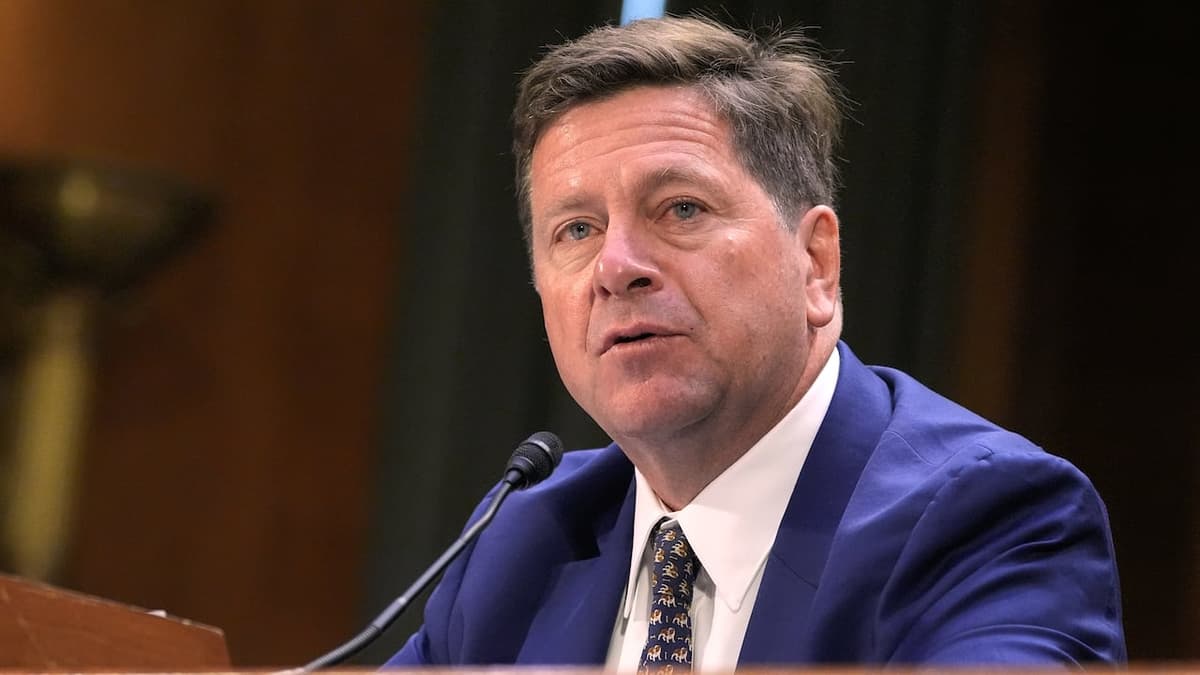
AITrump names U.S. intelligence chief Jay Clayton as new AI czar
U.S. President Donald Trump stated on Sunday he had named Jay Clayton, the director of national intelligence, as the administration's artificial intelligence czar, tasking him with co-ordinating the administration's efforts to maintain U.S. leadership in the technology. Trump, who has pushed to...